

As Seen On
OPRAH | O MAGAZINE | GOOD MORNING AMERICA | CNBC | INSTYLE
what i do
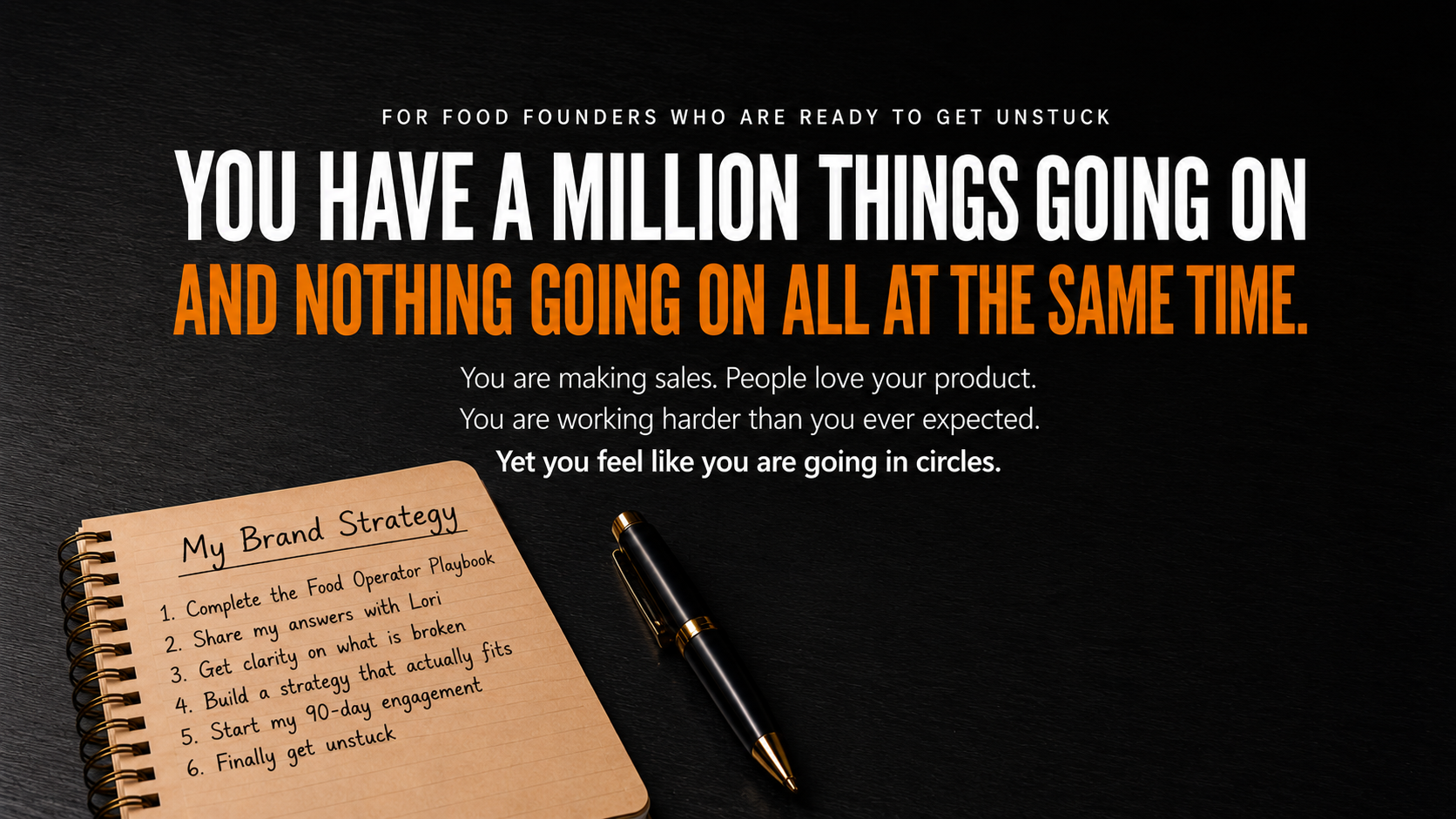
Does this sound familiar?
"Why am I not further ahead by now?"
"Why am I killing myself and still barely making money?"
"Why does everyone else seem to figure this out?"
"Why does it always feel like survival mode?"
These are the conversations food founders have with themselves long before they ever talk to someone like me.
I had them too. I bought a food business in 2002 with no industry background and no roadmap, bootstrapped it to about 30 employees and national retail shelves, and sold it in 2020. I have made almost every mistake a food founder can make, and paid for most of them.
So when I say I know where the business is actually stuck, I am not guessing. I have been the one buried in the day to day, certain that the next retailer or the next product launch would finally be the thing that changed everything.
Sometimes it is. Most of the time, the real problem is something much less obvious, and it usually falls into one of five places:
Pricing that looked fine on paper and quietly bled the business dry.
Packaging that never explained what made the product worth buying.
Messaging that talked about the founder's passion instead of the customer's problem.
A product line that grew wider instead of stronger.
A retail strategy chasing exposure instead of profit.
I help you find which one (or two, or three) is actually holding you back, and what to do about it. Not what you want to hear. What is actually true, based on what worked, what did not, and what nearly sank me the first time around.
Because once you know what is really wrong, the decisions in front of you get a lot easier to make.
what happens when we work together
The first thing that usually happens is relief.
Not because the problems disappear overnight, but because for the first time in a long time, someone is looking at the business without an agenda. No investor pressure. No retailer promising the moon. No well meaning friend telling you it will all work out.
Most food founders are too close to their own business to see it clearly. You are exhausted, financially stretched, emotionally attached to decisions you made years ago, and buried in whatever fire is burning today. That is not a character flaw. It is just what happens when you are the one living inside the business every single day.
So we start by slowing down.
We do not chase every idea at once. We look at the actual numbers, the actual channel strategy, and the actual decisions you have been making on instinct, and we figure out which ones are working, which ones are not, and why.
I am not going to hand you a generic framework and disappear. I ask the questions your team will not ask you, the ones your own optimism tends to skip past. Sometimes that means telling you the retailer you are chasing is not worth the margin. Sometimes it means telling you the packaging redesign you want is not the actual problem. I will tell you either way, because a nice conversation that avoids the real issue does not fix anything.
By the end of our work together, most founders are not just calmer. They have a specific, written sense of what to focus on next, what to stop spending money and time on, and why the growth that felt so hard to get was not sticking.
You stop guessing. You stop chasing every opportunity that lands in your inbox. And you start moving with an actual plan instead of momentum alone.
HOW IT WORKS
Complete the Food Founder Playbook (included with your 90-day engagement)
Share your answers with me before we talk
Get clarity on what is actually broken
Build a strategy that actually fits your business
Start the 90-day engagement
Finally get unstuck
A DECISION THAT SHAPED EVERYTHING
A few years before I sold the business, a mass specialty grocer came calling.
The kind of retailer every food founder dreams about landing. National shelf space, real volume, the validation that comes with a big name attached to your brand.
We agreed to a price. Then the retailer started requiring changes: ingredients, packaging, specifications that added cost after the number was already locked in. By the time we ran the real math, the margin had eroded to about 6%, and supplying them at their volume would have meant investing roughly $200,000 in new production equipment we did not have the cushion to risk.
I said no.
Years later, the new owners had the capital I did not, and they took the deal.
They lasted one season on the shelf.
Getting a purchase order from a big retailer feels like winning. It feels like the moment you can finally say you made it. But for most mass retailers, landing on the shelf is when the real cost begins, not ends. You are the one funding the sampling and the marketing to actually drive sales. The retailer does not do that for you. Then the chargebacks and fees show up, and the payday you expected to be $20,000 turns into $3,000, with the rest quietly eaten by costs nobody warned you about.
That is the part most food founders never get told before they say yes.
I help you ask the real questions first, so you find out what a deal actually costs before it costs you the business.
about lori
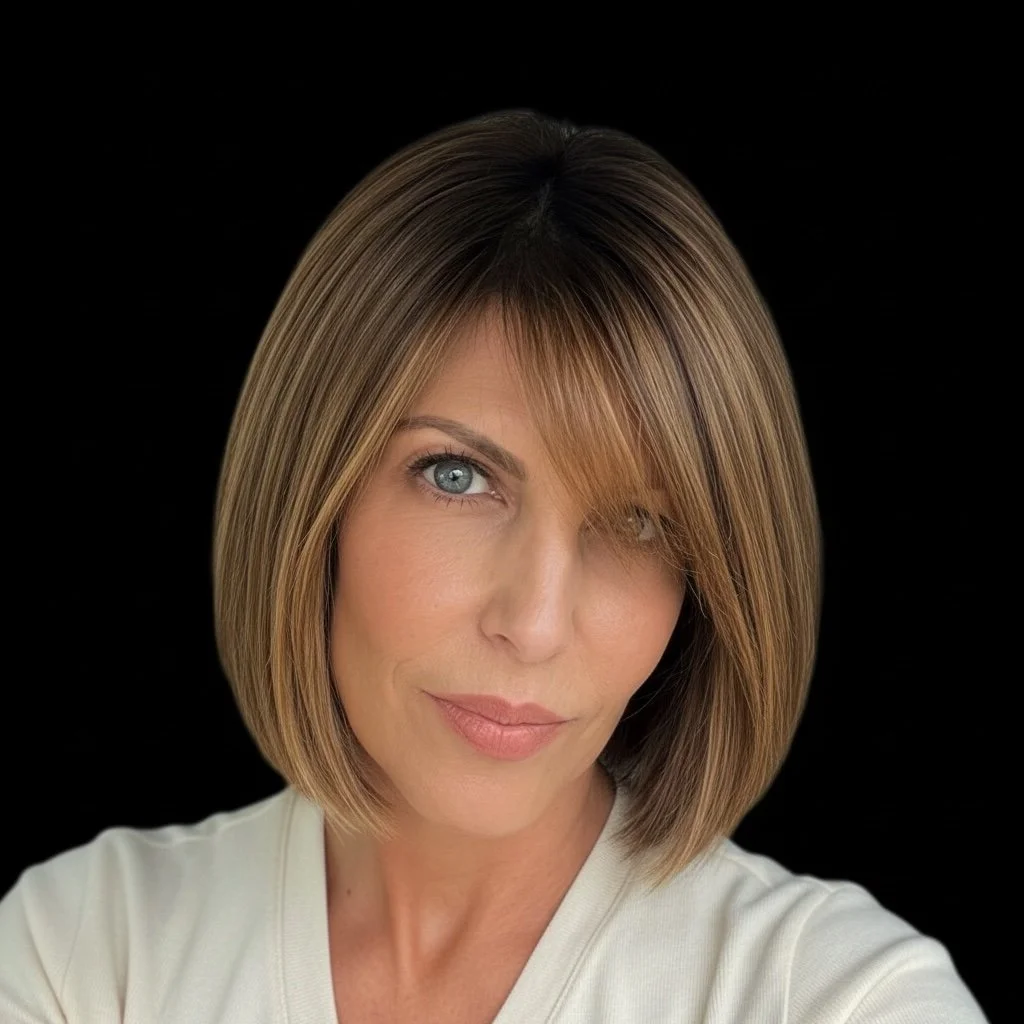
I wasn't a chef. I wasn't a food industry insider. I bought a cake company in 2002 because I thought the hours would be easy.
They weren't.
I had no culinary degree, no roadmap, and no idea what I was doing in the first year. What I had was an operator's instinct and a refusal to guess my way through decisions that actually mattered.
The first two years were hard. The month we cleared $19 in profit, I was genuinely proud, because it meant the business was real.
Then Oprah named us one of her Favorite Things.
...Over the next 16 years I built long-term partnerships with Williams Sonoma, Goldbelly, Neiman Marcus, QVC, 1-800-Flowers, and Whole Foods, grew the company to about 30 employees, and got national press along the way, including O Magazine, Good Morning America, and CNBC.
But that growth did not come from chasing the obvious path. Grocery retail looked like the destination every food founder assumes they are supposed to reach, but I could not meet the volume, the food safety certification, or the margin requirements it demanded, not in the early years. So I built something else instead: a direct-to-consumer shipping business, wrapped in packaging designed to feel like a gift, not a grocery item. That pivot took the business from $100,000 in annual sales to national retail partnerships and a company people recognized by name.
Grocery retail eventually became part of the business too. But it came after the foundation was built, not before, and knowing the difference between those two timings is a large part of what I now help other founders see in their own business.
But the placements were never the real lesson. The real lesson was what happened behind the scenes: a big order is not the same as a profitable order. Growth does not fix broken systems. And founders with genuinely great products still get stuck, constantly, because the product was never the problem.
In 2020, I sold the business. Successfully, and on my terms.
That is why I started Karmel & Company. I am not guessing at what food founders go through. I built the exact kind of business you are building, made the exact kind of mistakes you are trying to avoid, and know precisely where the real problems tend to hide.
I speak your language because I lived it first.
when the right question changes everything
Jamie had been building her performance nutrition brand for seven years. Great product. Real credentials. A loyal following. And a brand name that made complete sense to her — and no one else.
Here's how she described what happened next:
"Behind the scenes over the past few months, I've been working with a business consultant who asked me a simple question that honestly stopped me in my tracks: What is The Office Health? I started explaining that I own a gym called The Office, and that The Office Health felt like a natural extension for the wellness side of the business. Then she said, 'Well what if I don't know you own a gym?' I knew where she was going with this and panic immediately set in at the thought of having to change the name of my business. She kept bringing me back to the Unicorn — our icon, the symbol people always remembered. That question had my creativity swirling. Needless to say, I strongly agreed to her suggestion and ran with it."
— Jamie Maitland, Founder, The Unicorn Co.
That's the work. Not telling her what to do. Asking what she hadn't thought to ask herself.
WHEN GROWTH ISN’T THE GOAL
"As our business grew, Lori helped me understand the realities of working with retailers and wholesale customers. She gave me real insight into how retailers evaluate products, what actually drives a successful partnership, and why growth without the right strategy can create as many problems as it solves.
The most valuable lesson I took away was that bigger isn't always better. Landing a large account doesn't automatically make the business healthier. Lori helped me look at opportunities through a more strategic lens and understand what sustainable growth actually looks like."
Shar Melwani
Founder
Cookies by Shar
work with me
the 90 day engagement
-
A focused 90-day engagement for food founders who are ready for outside eyes on their business. It starts with the Food Founder Playbook, included at no extra cost, so we walk into our first call already working from your real numbers instead of starting cold. From there: four structured calls, email access between sessions, a written strategy summary after our kickoff, and a 48-hour response guarantee. We work through your numbers, your channel, your positioning, and your next move, in that order.
By the end of our work together, you will usually have:
a much clearer direction for the business
defined priorities
honest feedback about what is and is not working
a better understanding of where your time and money should go
a strategy that actually fits your business
a written action plan you can use moving forward
Most founders leave feeling clearer, calmer, and far more confident in the decisions they are making.
-
Because you have already completed the Food Founder Playbook, we do not spend our first call getting to know your business from scratch. You walk in already having done the hard work of putting your numbers, your channel strategy, and your instincts down on paper, and I walk in already having read it.
That means we spend our 90 minutes going deeper, not catching up. We dig into what your answers actually reveal: the assumptions worth questioning, the decisions you have been making on instinct, and the tough questions your partners, your customers, and your own optimism usually let slide.
By the end of this call, the fog will clear. You will leave with absolute certainty about what is working, what is not, and exactly what needs to change first.
-
$2,500 for the full 90-day engagement, including the Food Founder Playbook as your intake diagnostic. You complete it before we talk, so our first call starts with clarity instead of catching up.
This is not a course, not a template, and not a one-hour pep talk. It's a real working relationship with someone who has built, scaled, and exited a food business, and who will tell you the truth about yours.
Ready to clear the fog? Click below to book your call.
(If you're not ready for that conversation yet, you can start with the Food Founder Playbook alone for $97. It will either answer your question or show you exactly what to bring to our first call.)
the playbook
Not ready to talk yet? Start here.
Most food founders are so deep in the day-to-day that they lose the ability to see the business objectively anymore.
The Food Founder Playbook was designed to help you step back, identify what may actually be holding the business back, and start making clearer, more intentional decisions moving forward.
This is not just something you read.
It is a working document built around guided questions, exercises, and the same patterns I see repeatedly when founders come to me feeling overwhelmed, reactive, and unsure what to focus on next.
The goal is not to give you more information.
The goal is to help you finally see the business more clearly, understand what needs your attention, and know which actions to take next.
$97 for instant access.
If you later decide you are ready for the full 90-day engagement, the $97 you already paid will be credited toward it. The Playbook is also included at no extra cost for anyone who signs up for the 90-day engagement directly. Either way, it is the same tool, and the right place to start.